

What Is Pre-RFP Intelligence?
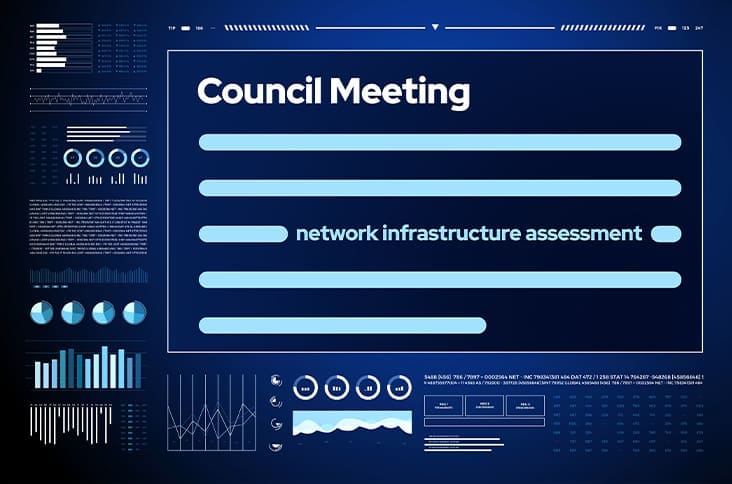
juin 18, 2026A school district’s board agenda item about a « network infrastructure assessment » does not look like an opportunity. There is no dollar figure attached, no procurement notice, no deadline. Most business development (BD) teams would scroll past it entirely.
Six months later, the same district posts a Request for Proposal (RFP) for a campus-wide technology modernization. The firms that knew it was coming had already mapped the account, assessed their fit, and started shaping their positioning. The firms that found it through a bid alert had two weeks to respond.
That gap — between the moment an agency starts planning and the day it posts a solicitation — is where pre-RFP intelligence operates. And for most BD teams relying on standard government contract data, this entire phase is almost invisible.
Pre-RFP intelligence is the practice of monitoring public planning records — capital budgets, board agendas, feasibility studies, and committee reports — to identify government buying intent before a formal solicitation exists.
What pre-RFP intelligence means in SLED procurement
In SLED procurement, the formal solicitation is rarely where a project begins. Cities, counties, and school districts plan capital investments through structured processes: multi-year capital improvement plans, annual budget cycles, board approvals, and committee reviews. These happen on public calendars, produce public documents, and follow predictable timelines tied to fiscal year deadlines and approval windows.
Monitoring these documents creates an early alert system for public sector business development. When a county board discusses a facilities assessment in a capital budget workshop, that is a signal. When a school district includes a network infrastructure upgrade in its five-year capital plan, that is a signal. When a city council approves funding for a feasibility study on fleet electrification, that is a signal.
None of those events is a formal procurement. But each one marks a moment when project intent becomes visible. The Government Finance Officers Association (GFOA), whose guidance on capital planning, describes this process as a structured system for identifying, prioritizing, and funding projects before execution. For BD teams, that structure creates a monitoring opportunity. The planning language that precedes a solicitation is not noise. It is the earliest form of buying intent available in the public sector.
Where early government buying signals appear before an RFP
The documents that carry early project signals are public by design. SLED agencies are required to publish agendas, minutes, budget materials, and specific planning records. The hurdle is not access; it is fragmentation. A single mid-sized metro area might involve a city, a county, a unified school district, a transit authority, and a public utility, each running it’s own meeting schedules, document systems, and approval timelines.
The most useful document types for early signal government procurement fall into a consistent set of categories:
- Council and board agendas and minutes often contain the first explicit mention of a capital project, a department request for study funding, or a committee recommendation. A single agenda item referencing a facility condition report or a technology modernization discussion can be the earliest indicator of a future contract.
- Capital improvement plans (CIPs) and capital budgets are where funded project intent lives. When a project appears in a capital plan, it has cleared a significant internal threshold. Budget pressure and approval cycles mean that projects in a CIP are more likely to move to procurement than items still sitting on departmental wish lists.
- Feasibility studies and planning commission documents appear at the moment an agency moves from discussing a need to investigating it formally. These indicate that scope definition is underway, which is the final stage before procurement planning begins.
- Board packets and committee reports often contain staff recommendations, cost estimates, and vendor-neutral project descriptions that reveal scope direction before specifications are drafted.
Monitoring these documents manually across dozens of target agencies is slow and inconsistent. The teams that do it well have either built a structured workflow or moved to tools that aggregate council meeting intelligence across agencies automatically.
Why bid alerts alone can leave BD teams reacting late
Bid alert tools serve a real purpose. They reduce the chance of missing a posted opportunity, centralize active solicitations, and save researchers the time they would otherwise spend checking individual procurement portals. The problem is not the technology. The problem is where the timeline starts.
By the time a solicitation is posted, several things have already happened. The agency has scoped the project, often with input from department heads and end-users. It has developed specifications, cleared budget and approval milestones, and shaped requirements around what it believes it needs.
A BD team entering at the solicitation stage is not starting from scratch. Instead, the team enters a process already in motion. You have less time, less context about agency priorities, and less opportunity to align your positioning with the direction the project has taken. For complex, high-value SLED opportunities in infrastructure, technology, or capital construction, that timing gap is decisive.
NIGP describes public procurement as rule-bound, transparent, and process-driven by design. That transparency is the advantage. The same public accountability governing the solicitation stage also governs the planning stages that precede it. Treating bid alerts as the sole discovery mechanism means choosing to monitor only the last public step in a much longer process.
How BD teams turn early signals into qualified pursuits
Identifying an early signal is not the same as having a qualified pursuit. A city discussing infrastructure investment does not guarantee a project will fund, scope, or go to public procurement on a specific timeline. The operational discipline of pre-bid intelligence lies in knowing how to evaluate what a signal represents.
The questions that matter at the signal stage are practical ones. Has the project appeared in a capital plan, or is it still a discussion? Has the board approved a study, or only received a staff report? Is there an identified funding source, or is the project contingent on grants or future budget cycles? The answers determine how much pursuit effort is warranted and when.
High-performing BD teams use early signals to make better go/no-go decisions before a formal opportunity exists. A capture manager who spots a school district board discussion about cybersecurity modernization six months out can map the account, assess fit, and invest selectively. A BD director who sees a city council approve a feasibility study for fleet electrification gains a realistic lead time for partner alignment. That is meaningfully different from reading an RFP and deciding in two weeks whether to respond.
Ontopical is built for this stage of BD work. It’s Early Signal Discovery to surface project intent from meeting minutes, capital budgets, and public records across 50,000+ SLED agencies, paired with Video Intelligence that pinpoints critical decisions inside long council recordings without manual scrubbing. Teams can move from fragmented manual monitoring to a consistent workflow, connecting those early signals directly with robust Solicitation Search to track the entire lifecycle. The goal is not more leads. It is better decisions about which signals deserve pursuit investment and when.
Key Takeaway
Pre-RFP intelligence is not a shortcut to more leads. It is a discipline for making better decisions about which public-sector opportunities deserve your team’s time. SLED agencies document their capital intent long before they post solicitations. The teams that monitor those earlier signals consistently, rather than waiting for bid alerts, are better positioned to pursue the right opportunities with the right context and timing. In SLED procurement, the competitive advantage is built in the planning stage.
FAQ
What is the difference between pre-RFP intelligence and a bid alert?
A bid alert notifies you when a solicitation has already been publicly posted. Pre-RFP intelligence surfaces signals from the planning and approval stages that precede the solicitation, such as capital plan items, council agenda discussions, and feasibility study approvals. The practical difference is timing: early signals can put a project on your radar months before a formal procurement exists, which changes how much context and positioning time your team has.
Which public records are most useful for finding SLED opportunities before solicitation?
The most useful records are capital improvement plans, council and board agendas and minutes, feasibility studies, budget workshop materials, and committee staff reports. Capital plans signal that a project has cleared internal funding thresholds, while agendas and minutes often carry the first explicit mention of a project before its scope reaches procurement.